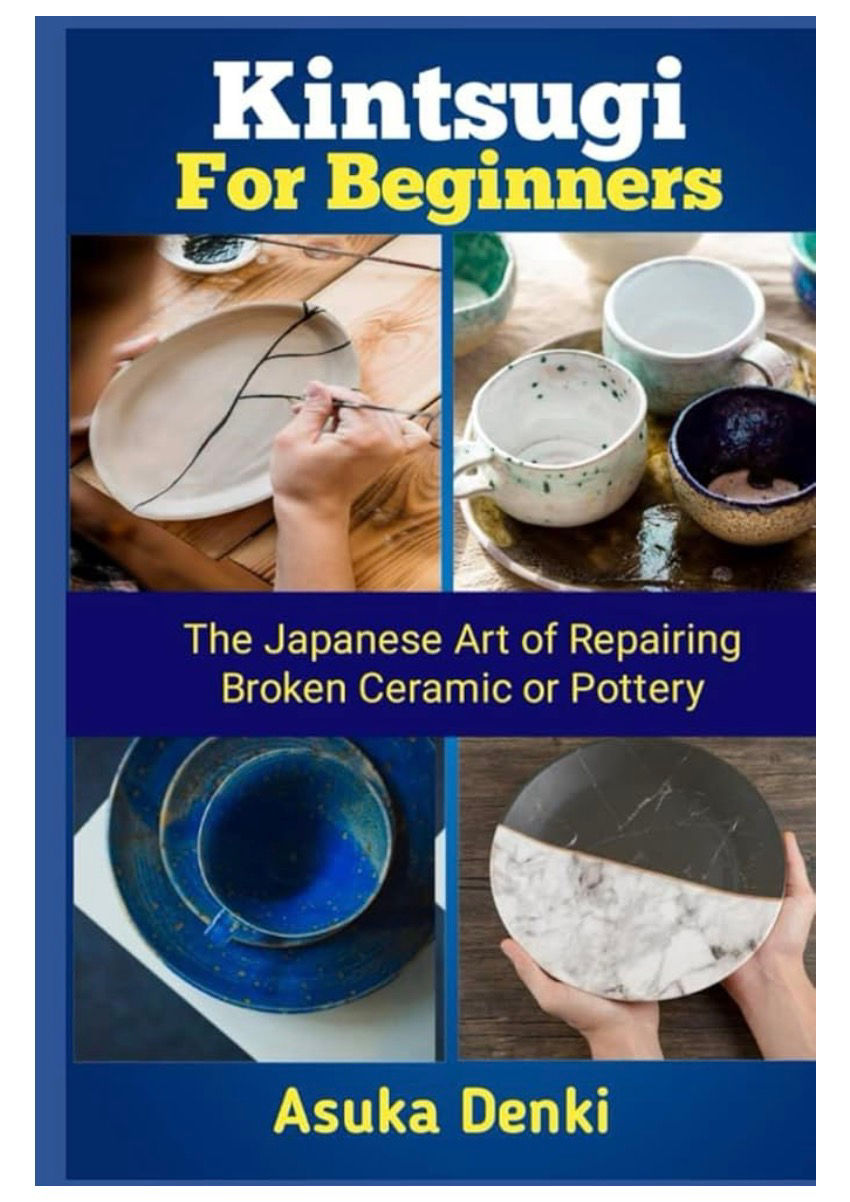
Kintsugi For Beginners - The Japanese Art of Reparing Broken Ceramic or Pottery
Kintsugi, also known as Kintsukuroi, is a Japanese art form. Its philosophy involves restoring broken pottery or ceramics with lacquer mixed with powdered gold, silver, or platinum. "Kintsugi" is a Japanese phrase that translates as "golden joinery" or "golden repair." The practice involves highlighting the cracks and imperfections in the broken pottery rather than concealing them. It embraces the idea that breakage and repair are an integral part of an object's history, and rather than disguising flaws, they should be celebrated and made visible. The philosophy behind kintsugi extends beyond the physical repair of objects. It embodies the Japanese aesthetic principle of "wabi-sabi," which emphasizes the beauty of imperfection, impermanence, and the acceptance of the natural cycle of growth, decay, and transformation. This book offers a complete course in using urushi lacquer and powder in the traditional Japanese way. Your broken piece soon becomes whole again and more meaningful than ever before. Key Highlights of "Kintsugi Heart" include: Collecting the broken pieces: When pottery breaks, the pieces are carefully collected and saved for the repair process. Cleaning and preparing the pieces: The broken pieces are cleaned and prepared for reassembly. Joining with lacquer and gold: The broken pieces are carefully reassembled using a special type of lacquer mixed with powdered gold, silver, or platinum. The lacquer acts as a bonding agent, and the precious metal adds aesthetic value, highlighting the mended areas. Finishing and polishing: Once the repair is complete, the surface is polished to create a smooth and cohesive appearance.